The defect liability period, or DLP, is the window after handover when your developer must fix defects at their cost. Miss it and the bill becomes yours.
The defect liability period, often shortened to DLP, is the period after a property is handed over during which the developer or contractor remains responsible for fixing defects at their own cost. It is one of the most valuable protections a new property owner has, and one of the most commonly missed.
The DLP full form is simply defect liability period. You may also see it called the maintenance period, though the two are not identical, as explained below.
For most residential handovers in Dubai the defect liability period is 12 months from the date of handover. For structural elements, the developer liability can extend much longer under UAE law, commonly up to 10 years for major structural defects. Always check your sale and purchase agreement, because the exact terms are written there.
The clock starts at handover, the date you take legal possession of the unit, not the date you booked and not the date construction finished. This is why the handover inspection is the highest value moment you have. A defect logged on an independent report dated at or just after handover is almost impossible for a developer to argue is your fault, because the unit had barely been used.
The DLP is not open ended and it is not a free maintenance contract. It does not cover normal wear and tear, damage caused by the owner or a tenant, alterations or works carried out after handover, consumable items past their normal life, or faults caused by a lack of routine maintenance. Knowing where the line sits matters, because developers lean on these exclusions to reject otherwise valid claims. An independent report separates a genuine defect from an excluded item, so your claim holds.
People use the terms interchangeably, but there is a difference. The defect liability period is about the developer or contractor fixing faults they are responsible for. A maintenance period, or maintenance obligation, is about routine upkeep of the building and common areas, often funded by service charges. One is about fault, the other about upkeep.
A warranty is a promise about a specific product or installation, for example a water heater or a waterproofing membrane, for a set time. The defect liability period is a broader legal obligation on the developer for the property as handed over. You can rely on both, but the DLP is the one with a clock you must not miss.
UAE law separates everyday defects from major structural ones. Under the Civil Code, contractors and developers can be held liable for major structural defects, and for defects that threaten the stability or safety of the building, for up to 10 years from completion. This is often called decennial liability. It is a separate and much longer protection than the standard 12 month DLP, and it is why a documented condition record of your property has value well beyond the first year. If a serious structural issue appears later, a dated record of the property condition strengthens your position.
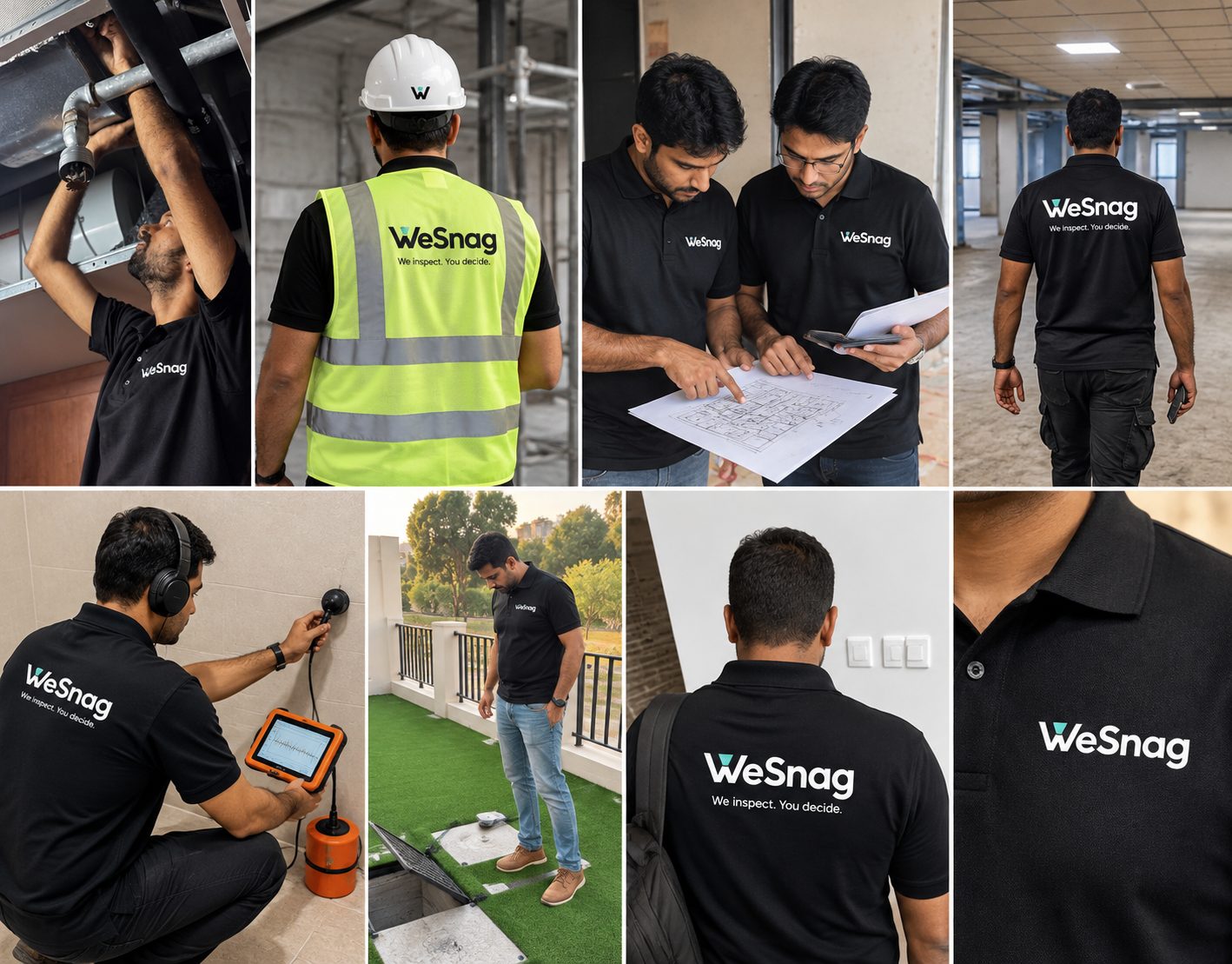
On volume handovers a developer will often try to close a snag as done when it is not, reclassify a real defect as cosmetic, or claim a fault is owner damage or normal settlement. The defence is the same every time, independent evidence. A graded report with photographs, and thermal images where relevant, dated inside your DLP, removes the argument and puts the burden back on the developer. Where an item is disputed, a re inspection that documents the defect is still open is your strongest next move, and it creates a clean paper trail if the matter ever escalates.
This is the single strongest reason to inspect on a schedule rather than hope. An independent WeSnag report, dated inside your DLP, is the evidence that keeps the cost of fixing defects with the developer, where it belongs.
Thermal imaging included. Report within 24 hours. We only inspect, we never sell the repairs.
WhatsApp usCall +971 56 678 4803Book your WeSnag inspection before handover and let the developer fix the defects, not you.
Or reach us on +971 56 678 4803 and hello@wesnag.ae